Peak Design launches a power bank with a kickstand: 5,000 mAh, Qi2.3 and 25 W, but only when plugged in
Peak Design has unveiled a magnetic power bank with an aluminum stand and the first Qi2.3 certification. It charges at 15 W on battery, 25 W only when plugged in.

Peak Design is known for its backpacks, camera bags and the Mobile phone mounting system. Now it is getting more serious about charging. On November 3 the American company unveiled a range of phone charging accessories. The most interesting is the Kickstand Travel Battery, a power bank that combines a magnetic battery with a phone stand.
A battery that becomes a stand
The Kickstand Travel Battery has a 5,000 mAh battery and attaches to the back of a phone with magnets, as with MagSafe. Wrapped around it is a frame of machined and anodized aluminum that opens out into a stand. A friction hinge allows any angle, and the phone can stand upright or on its side, which comes in handy for video calls or watching a movie on the train. You can also use the stand without charging, as the battery can be switched off manually.
The power bank measures 10.3 × 6.9 × 1.05 centimeters and weighs 145 grams. The exterior is covered in Clarino, a synthetic microfiber that resembles leather. Four LED lights show the battery level. It comes in two colors, Black and a light Moon.
Qi2.3, but 25 W only on a cable
Peak Design claims this is the first power bank with Qi2.3 certification, the latest version of the magnetic wireless charging standard. What exactly version 2.3 brings compared with 2.2, the manufacturer does not explain in its materials. What matters more to the user is the power at which the power bank actually charges:
- from its own battery: up to 15 W wirelessly,
- connected to a charger: up to 25 W wirelessly, while the power bank itself also charges.
For maximum power while charging both at once you need a charger of at least 40 W, and at least 20 W for fast charging. There is no charger in the box. The USB-C port is used to charge the battery or to charge another device, such as earbuds, from the power bank. An earbuds case with MagSafe can also be placed directly on the magnetic pad.
This is an important distinction. The 25 W figure on the box essentially applies to the mode in which the power bank is plugged into the wall and works as a wireless charger with a stand. On the go, where you need a power bank most, it charges at 15 W, which is the level of the first Qi2 chargers. Gear Patrol says the capacity is enough for almost one full charge of an iPhone 17. For Android owners, it is worth knowing that a phone without built-in magnets needs a case with a magnetic ring. At 9to5Google they used the power bank with a Pixel 11, on which, they say, it holds well.
Price and the other accessories
In the US the Kickstand Travel Battery costs $99.95, while Peak Design's European online store lists it at €99.99. Peak Design offers a lifetime warranty on the housing and two years on the battery. For comparison, in July Bang & Olufsen asked €145 for its first 5,000 mAh Qi2 power bank, without a stand.
Also arriving at the same time:
- Wireless Charging Station: a foldable station with two 25 W Qi2.2 magnetic pads and an extra USB-C port for a third device. For full power it needs a charger of at least 75 W, which is not in the box, though a 100 W cable is included. In the US it costs $99.95.
- Dual Slim Charger: a flat GaN charger with two USB-C ports and 65 W. Only one port delivers full power; with two devices the power is split 30 + 30 or 45 + 20 W. The price is $64.95.
- UltraStrand cables: 60 W and 240 W versions, the latter with USB4 data transfer of up to 40 Gb/s, in lengths of 15 cm, 1 m and 2 m.
On its European site Peak Design also mentions the slim, rechargeable Beacon Finder Card tracker for Apple's Find My network.
Our subjective take
Peak Design has done what it does best: a thoughtfully designed object for the everyday bag. The hinged aluminum stand is better thought out than the thin plastic legs some rivals use, and 145 grams for a battery and stand combined is acceptable.
For almost $100, however, you get only 5,000 mAh and 15 W on the go, which is less than cheaper rivals offer with 10,000 mAh. So you are buying design and build quality, not capacity. If you mainly use the power bank as an overnight bedside stand and a backup for the afternoon, it is a sensible purchase. Anyone looking for the most energy per dollar should look elsewhere.
This is the subjective view of The Pocket Brief editors.
Was this helpful?
Be the first to recommend this.
Keep reading

Xiaomi Clip goes global: clip-on earbuds, Find My for the case and 38 hours of battery
Xiaomi's first open clip-on earbuds have reached its global site six months after China: 5.5 g, LHDC 5.0 and Find My for the case. No price yet.

Elecom DE-C102: a semi-solid power bank promising 2,000 cycles, but only in Japan
Elecom's 10,000 mAh power bank has a gel electrolyte, 2,000 cycles and works down to −15 °C. It goes on sale in mid-November, but only in Japan.
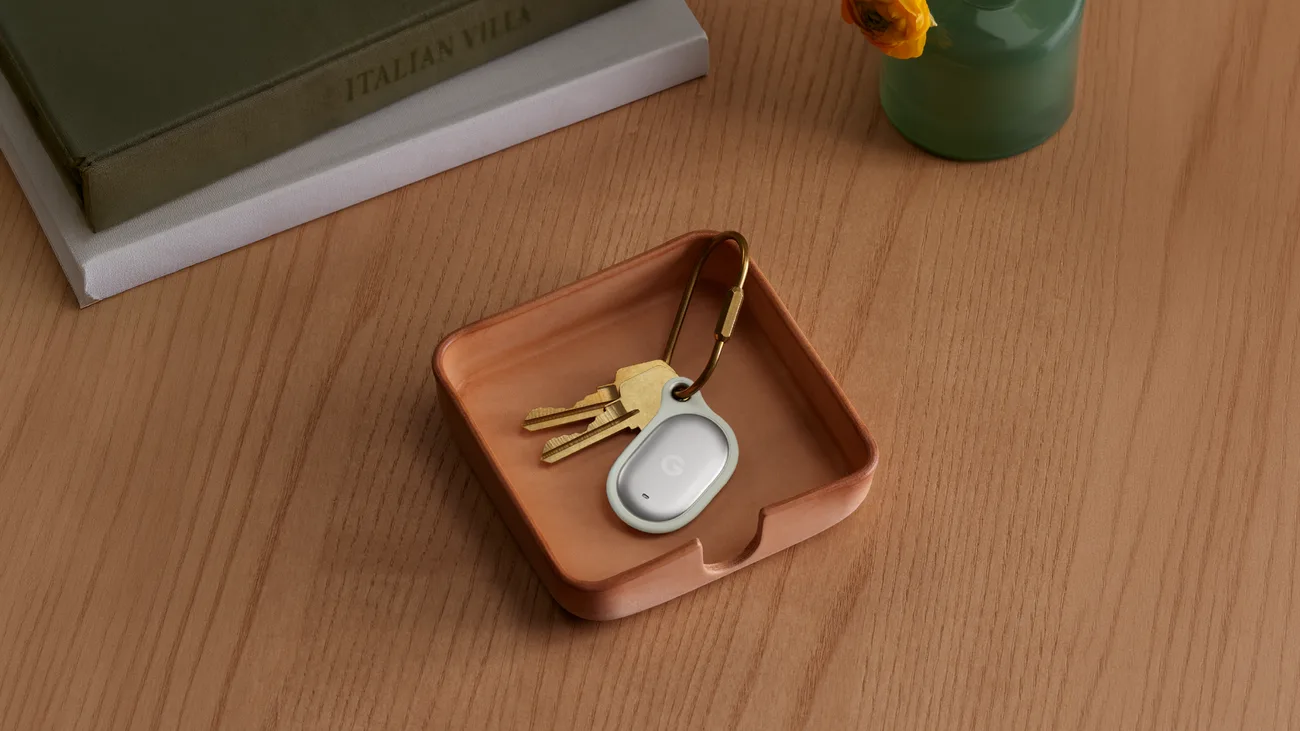
Google Pixel Tag goes on sale in eight countries for $29.99
Google's Pixel Tag tracker costs $29.99 and went on sale in eight countries, including the US, on November 11. No EU country made the list.